
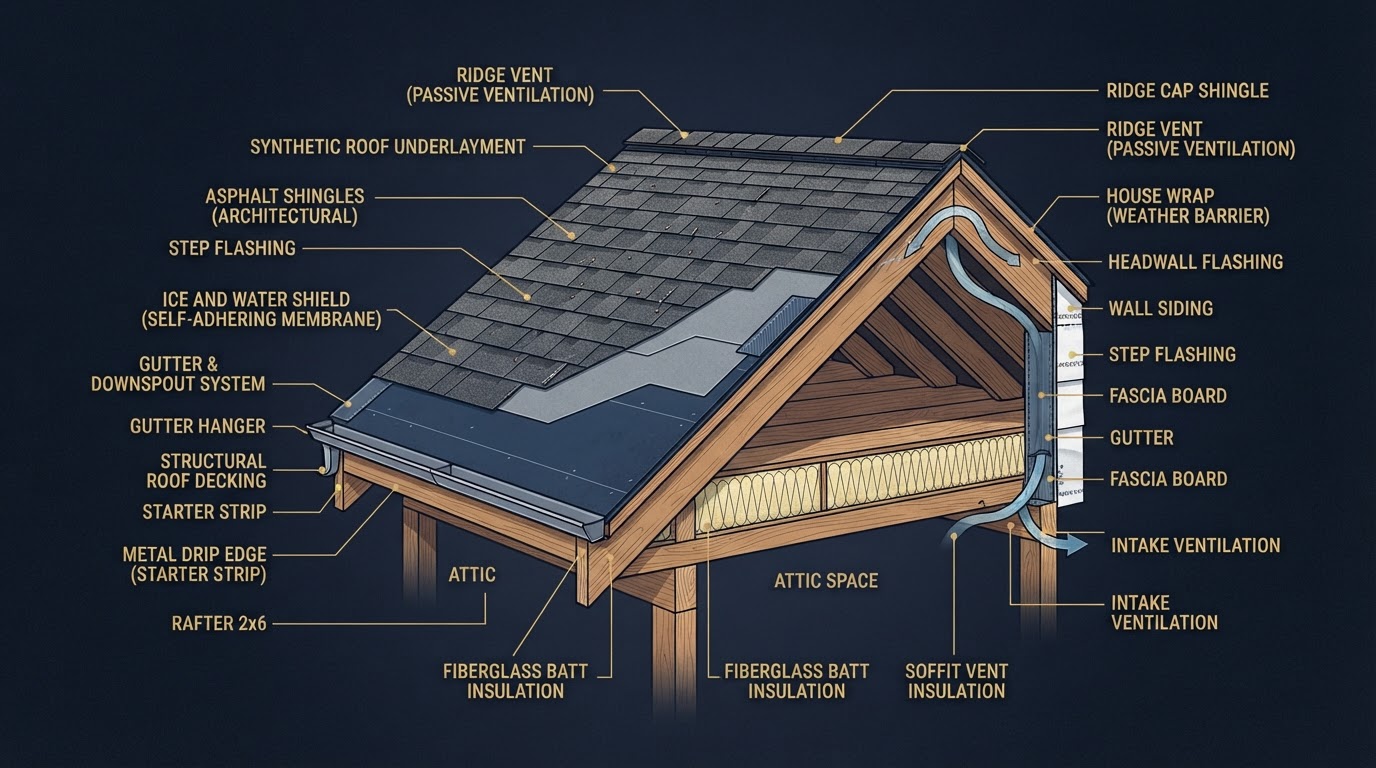
Your roof isn't just a layer of shingles. It's a complete system — and every part has a job to do.
When most homeowners picture a roof, they picture shingles. But a roof that actually performs through Ontario's winters, storms, and heat waves is built from the deck up, with each layer working together to shed water, manage moisture, and protect your home. Understanding how that system works helps you make better decisions about repairs, replacement, and the contractor you trust to do the work.
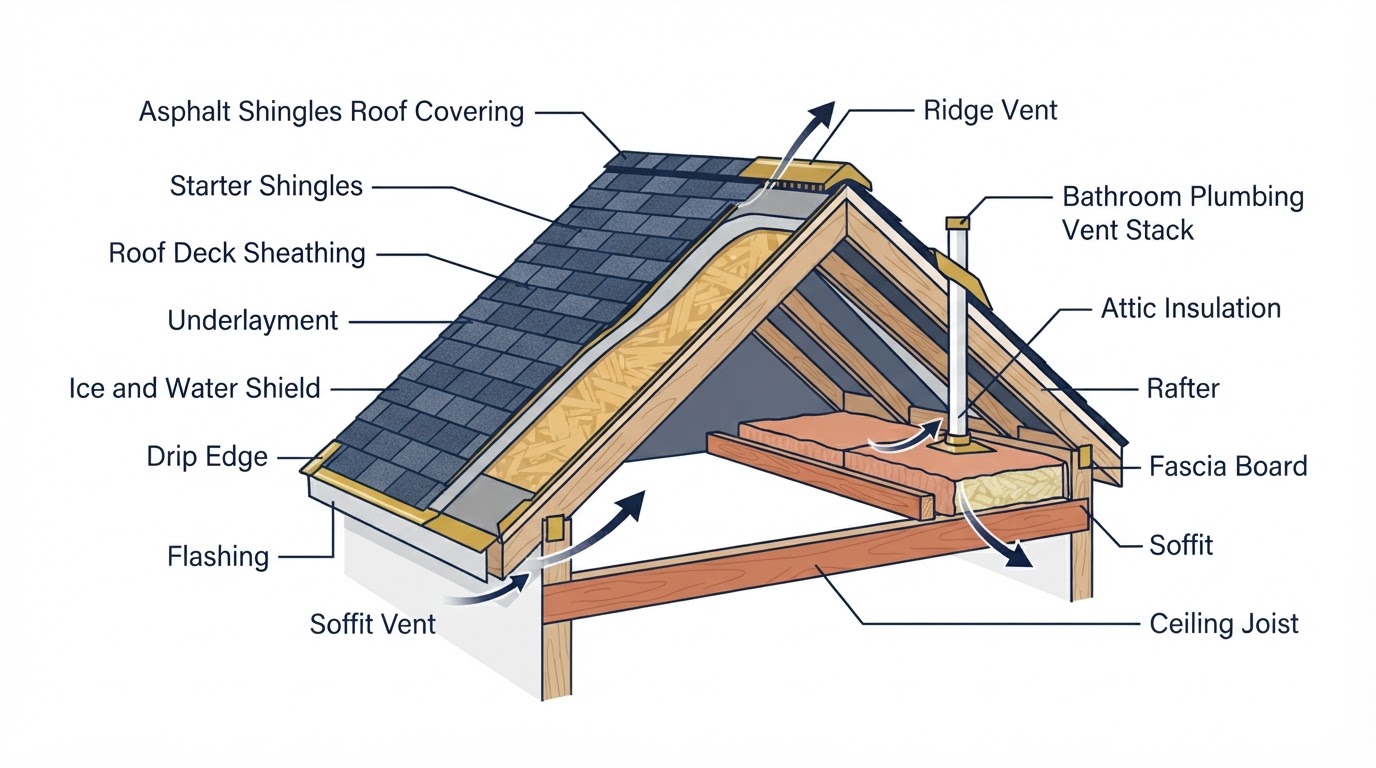
The Layers of a Roof System
A properly built residential roof has eight key components. Each one matters — skip or shortcut any of them, and the whole system is compromised.
Roof Deck (Sheathing)
The structural foundation — usually plywood or OSB panels fastened to the rafters. Everything above it depends on a solid, sound deck.
Underlayment
A water-resistant barrier (felt or synthetic) rolled across the deck beneath the shingles. It's a secondary line of defence against moisture.
Ice & Water Shield
A self-adhering waterproof membrane applied along eaves, valleys, and penetrations — critical in Ontario for preventing ice-dam leaks.
Drip Edge & Flashing
Metal flashing directs water away from edges, valleys, chimneys, vents, and wall transitions. Properly installed flashing is what stops most leaks.
Starter Shingles
A pre-cut starter strip laid along the eaves before the main shingles. It seals the bottom edge, provides a clean straight line to work from, and adds a second layer of wind resistance where uplift is strongest.
Roof Covering
The visible outer layer — asphalt shingles, metal, cedar, slate, or flat membrane. This is what sheds the water and takes the weather.
Bathroom & Plumbing Vents
Vented stack pipes that release moist air from bathrooms, kitchens, and plumbing drains up through the roof. Properly flashed and sealed, they keep moisture out of the attic while letting your home breathe.
Ventilation & Insulation
Ridge vents, soffit vents, and attic insulation work together to balance temperature and moisture. Good ventilation extends roof life and lowers energy costs.
Why Ventilation Is Part of the Roof
Many homeowners don't realize that attic ventilation is a roofing component, not just an energy feature. Without balanced intake (soffit) and exhaust (ridge) vents, warm moist air gets trapped. In winter that causes ice dams. In summer it bakes the shingles from underneath, shortening their life. A roof system that breathes lasts longer and performs better.
Eagle Roofing's Installation Process
A great roof system only works if it's installed the right way. Here's the process we follow on every roof replacement — no shortcuts, no skipped steps.
Inspection & Estimate
We assess the existing roof, document conditions with photos, and provide a clear, written estimate covering materials, scope, and timeline.
Property Protection
Before any work begins, we protect your landscaping, walls, and surrounding areas with tarps and coverings. Your home stays clean.
Tear-Off & Deck Inspection
We remove the old roofing down to the deck and inspect every panel. Rotted or damaged decking is replaced so the new roof has a solid foundation.
Underlayment & Ice & Water Shield
Drip edge is installed, followed by underlayment across the deck and ice and water shield along eaves, valleys, and penetrations.
Flashing Installation
New flashing is installed around chimneys, vents, skylights, and valleys to seal every transition where water is most likely to find a way in.
Roof Covering
The new shingles, metal, or membrane is installed according to manufacturer specifications — properly aligned, fastened, and sealed.
Ventilation Check
We verify ridge and soffit vents are clear and balanced so the attic breathes properly, protecting both the roof and your home's efficiency.
Cleanup & Final Walkthrough
We clear the site of debris and old materials, run a magnet for nails, and walk you through the finished work so you see exactly what was done.
Why the Process Matters
Two roofs built with the same materials can perform completely differently depending on how they were installed. The deck inspection, the ice and water shield placement, the flashing detail work, and the ventilation balance are where a roof either lasts 25 years or starts leaking in five.
That's why Eagle Roofing follows the same thorough process on every job — because the details that homeowners never see are the ones that determine whether the roof holds up.
Frequently Asked Questions
What are the main layers of a residential roof system?
A residential roof system includes the roof deck (plywood or OSB), underlayment, ice and water shield in vulnerable areas, drip edge flashing, the roof covering (shingles, metal, or other material), flashing around penetrations, and a ventilation system with ridge vents, soffit vents, and attic insulation.
Why is roof ventilation important?
Proper ventilation lets warm, moist air escape the attic while drawing in fresh air. This regulates temperature and moisture, helps prevent ice dams in winter, reduces shingle overheating in summer, and extends the life of the roof system.
What is ice and water shield and where is it used?
Ice and water shield is a self-adhering waterproof membrane applied along the eaves, valleys, and other vulnerable areas. In Ontario it's especially important for preventing ice-dam damage during freeze-thaw cycles.
How long does a roof installation take?
Most residential roof replacements are completed in one to two days depending on size, complexity, and weather. Eagle Roofing provides a clear timeline during your estimate.
What does Eagle Roofing's installation process include?
Our process includes inspection and estimate, property protection, tear-off, deck inspection and repair, underlayment and ice and water shield, flashing, the new roof covering, ventilation check, cleanup, and a final walkthrough with the homeowner.
Want to Know Where Your Roof Stands?
Whether you're planning a replacement or just want a professional assessment of your roof's condition, Eagle Roofing can help. We inspect, document, and explain what we find — in plain language. You may also find it useful to read about our roof replacement and roof repair services, or our Pre-Winter Roof Health Assessment.
Questions About Your Roof?
Eagle Roofing can professionally assess your roof, explain how your system is performing, and recommend the right next steps.
Eagle Roofing — Excellence Above Everything.